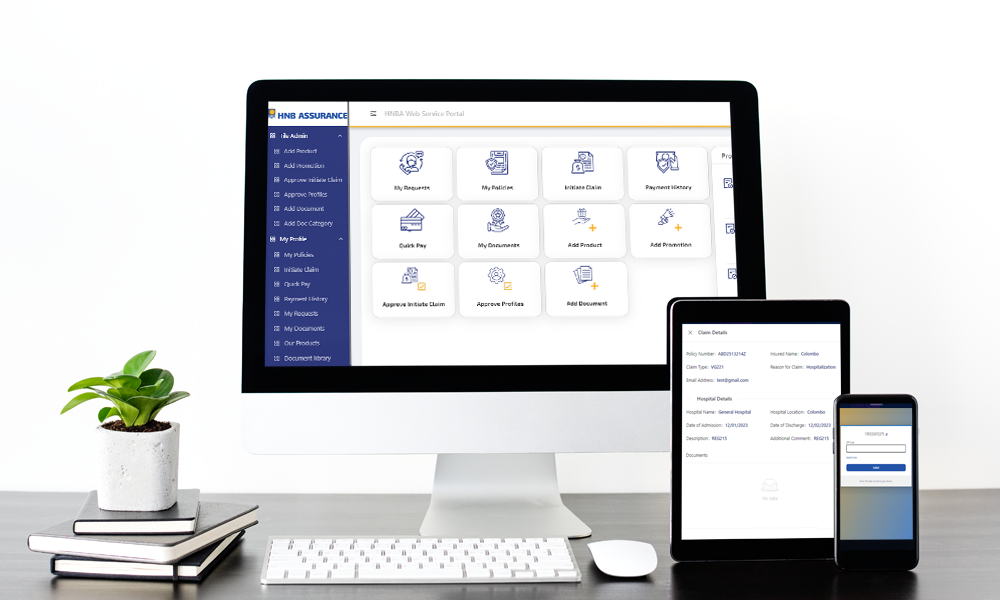
Insurance Customer Mobile App and an Insurance CRM are the twin front-end touchpoints of modern insurance systems. While they serve different audiences—one is built for the policyholder and the other for internal agents/customer service teams—they are deeply interconnected through a shared back-end ecosystem.
Together, they bridge the gap between self-service digital engagement and human-assisted customer care.
1. Insurance Customer Mobile App
The Customer Mobile App is a self-service native (iOS/Android) or cross-platform application designed directly for policyholders. It shifts routine administrative tasks from call centers onto the customer’s phone.
Key Capabilities
- Digital Policy Management: View active policy details, coverage limits, digital ID cards, and download policy certificates (e.g., motor cover notes).
- Digital FNOL (First Notice of Loss): Report accidents instantly at the scene by taking photos/videos, capturing GPS coordinates, and uploading damage reports.
- Real-Time Claims Tracking: Live progress updates showing claim status (e.g., Submitted ➔ Survey Scheduled ➔ Repair Authorized ➔ Settled).
- Premium Payments & Renewals: One-click premium payments via digital wallets/credit cards and instant 1-touch policy renewals.
- Telematics & Gamification: For usage-based motor insurance (UBI), tracks driving behavior (speed, braking) and awards safety discounts or loyalty points.
- Self-Service Endorsements: Update personal details, add a new driver to a motor policy, or increase coverage limits without calling an agent.
2. Insurance CRM Portal
An Insurance CRM Portal is an enterprise workspace used by internal sales reps, call center agents, underwriters, and customer relationship managers. Unlike general CRMs, an Insurance CRM is structured around insurance-specific entities: Policyholders, Quotes, Policies, Claims, Endorsements, and Commissions.
Key Capabilities
- 360-Degree Customer View: Consolidates a client’s entire relationship with the carrier—all active policies, claim histories, payment records, and previous interactions—into a single screen.
- Lead & Opportunity Management: Tracks leads from web forms or aggregators, assigns them to agents based on rules, and automates follow-up reminders.
- Cross-Selling & Up-Selling Nudges: Uses customer data to suggest relevant products.
- Omnichannel Interaction Tracking: Logs incoming calls, emails, chat interactions, and mobile app activity into a unified timeline.
- Service Request Handling: Manages customer queries through structured SLA-backed tickets.
Features
- Automated Compensation Calculations
- Real-Time Reporting and Analytics
- Flexible Compensation Rules Engine
- Compliance and Audit Trail
- Scalable and Customizable
- Performance Tracking and Incentives