
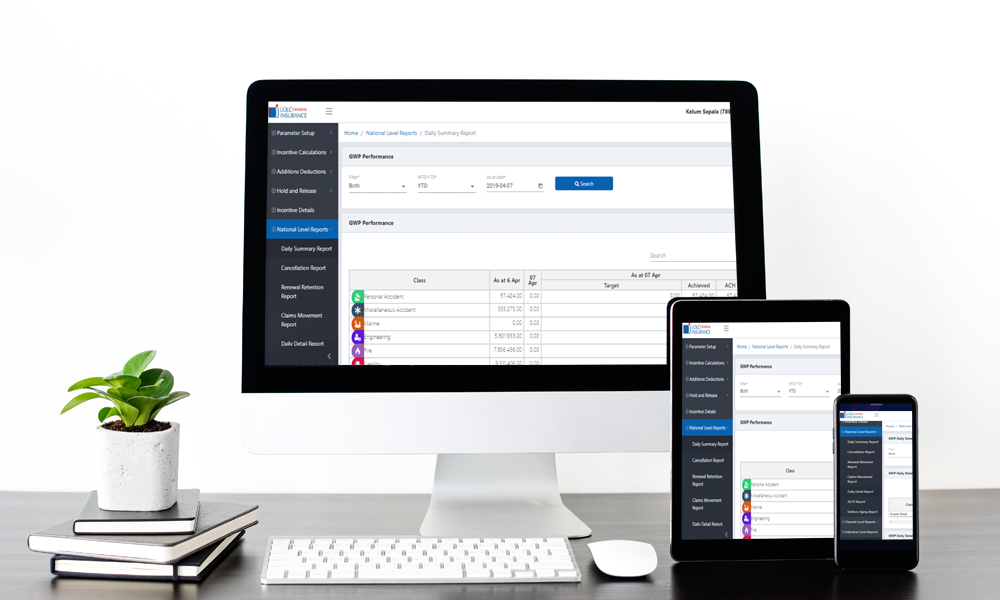
The Automated KPI and Grading Management Portal (also known as a Performance Scorecard or Agent/Employee Grading Module) is an analytical management system in insurance software that automatically evaluates, grades, and tracks the performance of distribution channels, underwriting teams, claim adjusters, and partner networks.
Instead of relying on manual quarterly performance reviews or disconnected spreadsheets, this portal continuously pulls real-time operational data across the insurance suite, calculates predefined Key Performance Indicators (KPIs), and assigns dynamic grades (e.g., Tier A–D, Gold/Silver/Bronze, or numerical scores) to individuals, branches, or external partners.
Core Entities Evaluated & Key Metrics Tracked
The portal applies tailored KPI algorithms depending on who is being evaluated across the insurance ecosystem:
1. Sales Agents, Brokers & Bancassurance Partners
- Loss Ratio Quality: Evaluates whether an agent brings in profitable business or high-risk policies.
- Persistency / Renewal Rate: Measures the percentage of policies renewed year-over-year.
- Product Mix: Tracks whether an advisor is selling a balanced portfolio rather than just single easy-to-sell products.
- Grading Output: Higher-graded agents receive higher commission override tiers, preferential underwriting authority, or co-marketing budgets.
2. Underwriters
- Turnaround Time (TAT): Speed of processing complex quote referrals.
- Loss Ratio Performance: Long-term underwriting profitability of bound policies.
- Declination & Exception Rate: Tracking how often an underwriter overrides system recommendations or breaches standard guidelines.
3. Claims Adjusters & Network Partners (Garages/Hospitals)
- Average Settlement Time: Time taken from FNOL (First Notice of Loss) to claim discharge.
- Estimate Accuracy: Comparing initial repair estimates against final payouts.
- Customer CSAT: Post-claim customer satisfaction ratings.
- Grading Output: Highly rated panel garages get priority routing for vehicle repairs; low-graded adjusters are flagged for audit.
How Automated Grading Works
- Real-Time Data Ingestion: Continuously pulls live transactional data from Policy Administration, Claims, CRM, and Billing modules via event buses or automated background jobs.
- Dynamic Score Calculation: Applies configurable business rules and weightages (e.g., Total Score = 40% Premium Volume + 40% Loss Ratio + 20% Persistency Rate).
- Grade Assignment & Segmentation: Assigns grades or tier levels automatically when performance crosses predefined benchmark thresholds.
- System Action Triggering: Feeds grades back into core modules — triggering automatic commission tier adjustments, adjusting binding limits, or updating allocation logic in the Leads Management Portal.
Key Core Functional Capabilities
- Interactive Scorecard Dashboards: Gives managers and end-users a visual view of current scores, target gaps, and historical performance trends.
- Gamification & Benchmark Leaderboards: Drives performance across sales forces or branch staff by showing relative rankings against peers or regional benchmarks.
- Early Warning & Anomaly Alerts: Triggers notifications to risk managers when an agent or branch grade suddenly drops due to spiking loss ratios or unusual claim volumes.
- Configurable Weighting Engine: Allows business heads to adjust KPI weights seasonally or strategically without coding.
Key Business Benefits
| Operational Area | Impact of Automated KPI & Grading |
|---|---|
| Underwriting Profitability | Automatically identifies and rewards producers who bring in low-claim, high-margin risks. |
| Operational Efficiency | Eliminates weeks of manual spreadsheet calculations by HR and distribution management teams at year-end. |
| Vendor Management | Ensures panel garages and hospitals maintain service quality through objective, data-backed grading. |
| Fair & Transparent Incentives | Connects performance directly to payouts in the Compensation Portal, building trust with sales partners. |